
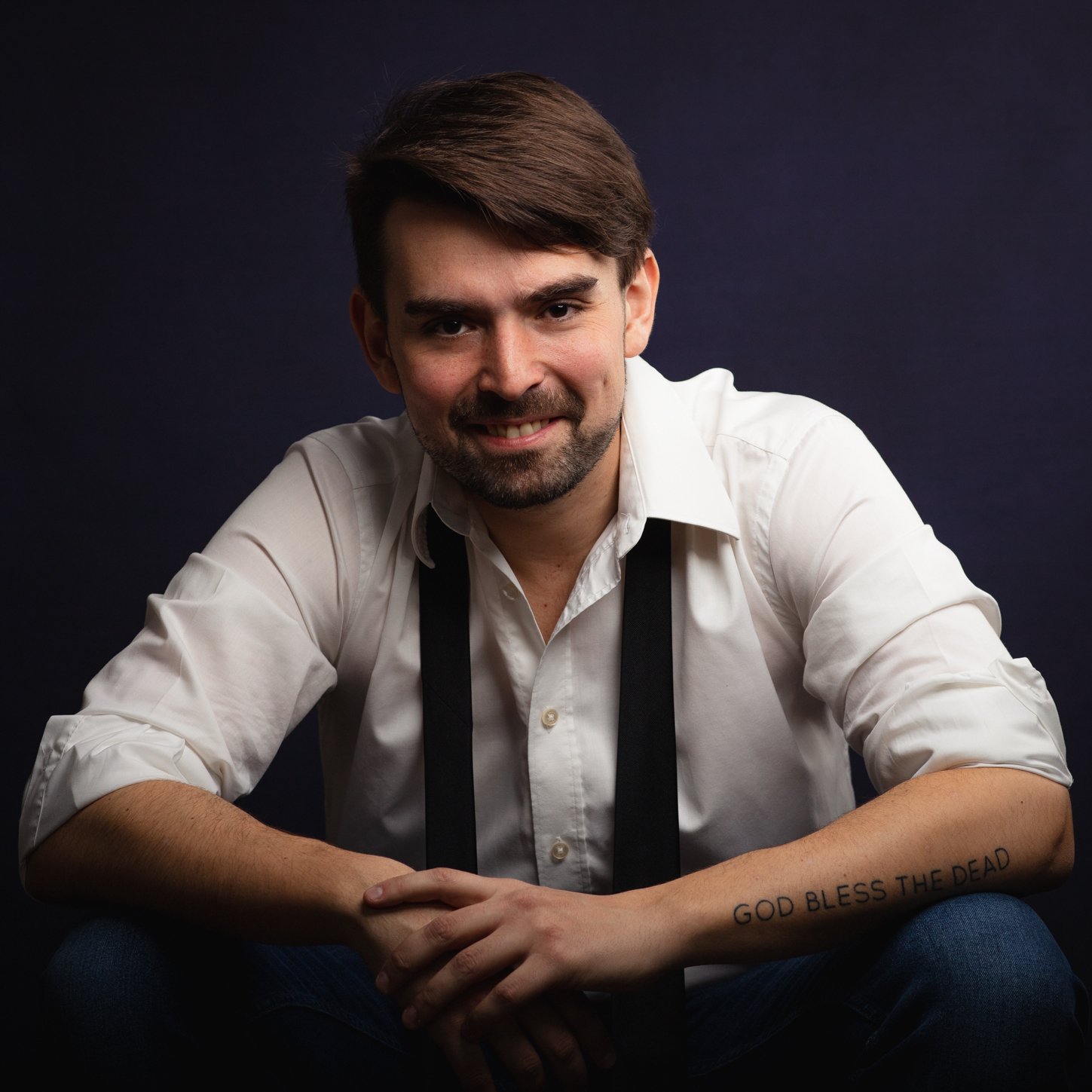
dr Patryk Wawrzyński
p.wawrzynski@alpakainnovations.com
Wiarygodna komunikacja
Analiza mowy ciała i sygnałów emocji
Inteligencja emocjonalna
Inspirujące przywództwo
Neuronauka behawioralna
Specjalizuję się w badaniu znaczenia emocji w komunikacji. Poszukuję sposobów wykorzystania wskaźników emocjonalnych do przewidzenia wpływu na odbiorców. Sięgam po narzędzia analizy komunikacji niewerbalnej – ekspresji twarzy, gestykulacji oraz zmiany w zachowaniu – a potem łączę je ze zgromadzonymi informacjami. Pozwala mi to badać spójność i wiarygodność komunikacji. Dzięki analizie sygnałów mowy ciała i wskazówkom neuronauki odpowiadam na pytania o emocje i stres, które odczuwają ludzie w konkretnym miejscu, czasie lub sytuacji.
Analiza zachowania i mowy ciała pomaga mi uczyć, jak lepiej i skuteczniej komunikować się z innymi ludźmi. Moja kariera naukowa i zawodowa od początku skupia się wokół znaczenia opowieści dla zmiany naszego zachowania. Dlatego chętnie sięgam po sprawdzone naukowo metody, aby pokazywać, co możemy zmienić, żeby nasze relacje z ludźmi dawały nam więcej satysfakcji i przynosiły mniej nieprzyjemnych doświadczeń. W swojej pracy skupiam się na rozwijaniu zdolności społecznych i emocjonalnych, aby pomóc klientom odnosić sukcesy.
Publikacje
P. Wawrzyński, J. Marszałek-Kawa, N. Sithole (2024). Transformation of the Constitutional Identity in South Africa after the Fall of Apartheid. Białostockie Studia Prawnicze, 29(3), 307–323. DOI: 10.15290/bsp.2024.29.03.17.
Streszczenie: This article investigates the designed transformation of South African political identity and its constitutional framework as a core aspect of the democratization of South Africa. It compares the racist and exclusive identity of the apartheid state with a redesigned identity of an inclusive and open ‘Rainbow Nation’, a concept coined by Archbishop Desmond Tutu and spearheaded by Nelson R. Mandela along with the African National Congress. The study considers changes in the legal framework of identity politics, from the Republic of South Africa Constitution Act of 1983 (and the previous apartheid republican Constitution of 1961) through the interim democratic Constitution of 1993 to the Constitution of the Republic of South Africa of 1996. It discusses the possible significance of the 18 amendments to the act regarding South Africans’ social and political identities, and establishes a complex and detailed portrayal of the republic’s legal framework of identity politics. The study combines legal, political, and cultural analysis of the role of law in formatting social and political identities, using survey results to test its impact on society. In conclusion, the paper considers the effects of post-apartheid identity transformation in South Africa.
F. Cyuńczyk, P. Wawrzyński (2024). System polityki historycznej w Polsce między konstytucyjną powinnością a instrumentalizacją prawa. Przegląd Prawa Konstytucyjnego, 77(1), 151–165. DOI: 10.15804/ppk.2024.01.11.
Streszczenie: Przedmiotem artykułu jest analiza związków prawa i polityki historycznej w Polsce w ujęciu systemowym, integrującym narzędzia nauk prawnych i politycznych. Głównym celem jest ukazanie wzajemnych zależności między prawem – ze szczególnym uwzględnieniem prawa konstytucyjnego – a zaangażowaniem państwa w politykę pamięci. Artykuł podsumowuje obecny stan prawny i jego ramy formalne dla systemu polityki historycznej oraz decyzje polityczne dotyczące realizacji konstytucyjnej powinności upamiętnienia przeszłości. Dyskutując elementy systemu polityki historycznej w Polsce, ich umiejscowienie w ramach prawnych oraz dynamikę działań politycznych autorzy ukazują, że pozorna służebna funkcja narzędzi prawnych wobec polityki jest w rzeczywistości złożoną współzależnością wynikającą z konstytucyjnych fundamentów prowadzenie polityki historycznej przez państwo.
J. Marszałek-Kawa, P. Wawrzyński, A. Jaczun (2024). Criminalization of Humanitarian Aid. W: E. Kużelewska, A. Kasińska-Metryka, K. Pałka-Suchojad, A. Piekutowska (Eds.), Geopolitical and Humanitarian Aspects of the Belarus–EU Border Conflict (90–103). Routledge.
Streszczenie: The chapter discusses the securitization of the 2021–2022 Belarus–Poland border crisis in the context of humanitarian aid limitations and compassionate responsiveness. It investigates how the Polish government implemented legal measures, including the state of emergency and criminal law, to control involvement in helping refugees and migrants and securitize the conflict. We explore whether the criminalization of humanitarian aid resulted from threat assessment and security reasons, or whether political motivations and anti-migration rhetoric determined it. Moreover, we consider the possible consequences of the government’s anti-humanitarian propaganda and the impact of criminalizing helping. The chapter presents the timeline of implemented legal instruments and securitization of the Belarus–Poland borderland, including the limitations of independent control of law enforcement activity. We analyze political interests in humanitarian aid criminalization in Poland, public opinion responses to the European migration crisis, and the significance of compassionate responsiveness and empathy in Polish political culture. Finally, the chapter addresses the practice of anti-humanitarian measures on the Belarus–Poland borderland: legal and psychological harassment, interrogation, detention, search, and oppressive treatment of caregivers, volunteers, and human rights activists. The study begins with the broader perspective of securitization and compassionate responsiveness, emphasizing a regulative role of personal distress.
P. Wawrzyński (2023). Twarz solidarności i pojednania? Niewerbalna
komunikacja emocji w wojennych przemówieniach Wołodymyra Zełenskiego do polskich odbiorców. Nowa Polityka Wschodnia, 39(4), 80–101. DOI: 10.15804/npw20233905.
Streszczenie: President V. Zelensky’s international popularity and sympathy resulted from his
empathetic image as the nation’s speaker after the Russian aggression in February. The novel application of technology helped him communicate with foreign audiences and receive international military, political, economic, and humanitarian support, strengthening the anti-Russian alliance. Poland was an essential partner in Zelensky’s strategy as Poles hosted millions of Ukrainian war refugees, marking the Polish society as a core target group of his communication. The paper presents the results of automated coding (FaceReader 9, general model, 30 fps) of the Ukrainian President’s facial expressions of emotions in three speeches addressed to the Polish audience after February 2022, comparing them with the results of a study on Zelensky’s 73 international addresses in the first year of the war. The study investigates differences in nonverbal targeting of Poles and other audiences, providing detailed profiles of analyzed speeches. The results suggest that the stage of the conflict primarily regulated his nonverbal communication, and then it was adapted to the targeted audience. (1) Zelensky increased emotional expressiveness in communication with the Poles, signaling all three dominant emotions (sadness, anger, and disgust). (2) The intensity of disgust had a reverse pattern than in the general sample, and it was reduced with time and replaced by more arousing anger. (3) The Ukrainian President significantly stronger displayed fear in his speeches to the Polish audience. The differences in nonverbal dynamics explain a reduced involvement of Polish society in helping Ukraine, as Zelensky’s initial empathetic image was replaced with a more aggressive style of wartime leadership.
P. Wawrzyński (2023). Efekt niewerbalnego pierwszego wrażenia w komunikacji wojennej prezydenta Wołodymyra Zełenskiego. Pomiędzy. Polsko-Ukraińskie Studia Interdyscyplinarne, 11(4), 13–30. DOI: 10.15804/PPUSI.2023.04.01.
Streszczenie: Komunikacja niewerbalna jest istotnym czynnikiem wpływającym na ocenę wiarygodności, cech osobowości i charakteru oraz motywację mówcy, kształtując zaufanie i nastawienie odbiorców. Szczególnego znaczenia komunikacja niewerbalna – ze względu na automatyzm przetwarzania i przewagę na treścią wypowiedzi – przybiera w początkowej fazie komunikacji, decydując o ewaluacji dokonywanej na podstawie pierwszego wrażenia. Artykuł prezentuje badanie sygnałów niewerbalnych, w szczególności ekspresji mimicznej twarzy, prezydenta Ukrainy Wołodymyra Zełenskiego w jego dwóch orędziach wygłoszonych w dniu rosyjskiej agresji na Ukrainę. Korzystając z automatycznego kodowania bazującego na Facial Action Coding System w systemie FaceReader 9 zostały w nim przedstawione wyniki dla zmiennych emocjonalnych w całości przemówień oraz w ich pierwszych piętnastu sekundach, decydujących o niewerbalnym pierwszym wrażeniu. Równocześnie, artykuł zawiera analizę innych komunikatów niewerbalnych – wyglądu, zachowania przestrzennego, gestykulacji oraz ruchu ciała – które mogły wpływać na odbiór Zełenskiego przez widzów, wzmacniając lub osłabiając efektywność sygnałów emocjonalnych. W rezultacie, dzięki porównaniu wyników dla porannego i wieczornego orędzia, możliwym było wskazanie kluczowych różnic między nimi oraz wyjaśnienie skuteczności komunikacyjnej ukraińskiego przywódcy w budowaniu wizerunku empatycznego obywatela-żołnierza i rzecznika interesu narodu.
P. Wawrzyński (2023). Pride and Compassion: How Emotional Strategies Target Audiences in Political Communication? Central European Journal of Communication, 15(3), 416–433. DOI: 10.51480/1899-5101.15.3(32).5.
Streszczenie: The paper discusses appeals to pride and compassion as emotional strategies for mobilization in political communication, developing the Emotional Rescue Model of enthusiasm, anger, and fear. Exploring general results of brain activity, facial expressions, cognitive responses, attitude change, and prosocial behavior, it examines how compelling pride-related and compassion-related narratives are. Moreover, it considers the possibilities of targeting emotional content to specific audiences, verifying how results correspond with participants’ empathy, political preferences, and attitudes toward collective remembrance. The paper explores age, gender, and election attendance as other possible factors correlated with the outcomes of manipulation. In conclusion, it suggested that appeals to pride should target supporters of the cause, but compassionate narratives can address non-supporters and undecided recipients.
P. Wawrzyński, J. Marszałek-Kawa (2023). Emotional Dynamics of Populism and Its Non-Populist Alternatives: Discussing the Role of Compassion and Pride. Polish Political Science Yearbook, 51(4), 47–62. DOI: 10.15804/ppsy202267.
Streszczenie: The paper discusses populist appeals to emotions in political communication, considering their role in the proliferation of political polarisation and radicalisation. Revisiting the Emotional Rescue Model of anger, enthusiasm, and fear, we considered pride and compassion low-arousal alternatives to populist storytelling. In the experiments, we tested how participants (n=364) respond to appeals to pride and compassion in their brain activity, emotional expressions, prosocial behaviour, attitude change, and memorisation. In the paper, we primarily discussed the results of the fMRI (neuroimaging) study and compared them with the previous studies on authentic pride, compassion, empathy, and reappraisal. Considering similarities in the activation of the superior and middle temporal gyri, temporal pole, inferior frontal gyrus, and dorsolateral prefrontal cortex, we argue that compassionate political narratives should be the most effective low-arousal alternative to populist storytelling. Moreover, stimulation of the reappraisal-related network in that group suggests that participants reframed emotional negativity into prosocial acts of caring and helping, also re-evaluating their attitudes.
P. Wawrzyński, J. Marszałek-Kawa (2023). Emotional Arousal and Valence and the Effects of Civic Education. The New Educational Review, 71, 168–179. DOI: 10.15804/tner.23.71.1.13.
Streszczenie: The paper discusses the influence of FaceReader-coded emotional arousal and valence on the effectiveness of civic education. The experimental design allowed the authors to observe relationships between emotional responsiveness and memorisation, attitude change, and prosocial behaviour. In the study with 90 adult participants, we video-recorded facial expressions while watching three parallel versions of a narrative on anti-communist opposition in Poland. The analysis of collected data suggested that emotional arousal is associated with prosocial behaviour and the valence of signalling with an attitude change, while cognitive effects are not related to emotional responsiveness. Moreover, civic education depends on the triad of emotions: sadness,
happiness, and disgust.
J. Marszałek-Kawa, P. Wawrzyński (2023). Polski model postautorytarnej transformacji tożsamości politycznej. Strukturalne aspekty niestabilności polityki historycznej. W: S. Galij-Skarbińska, M. Damazyn (red.), Historia zawsze bliska. Księga Pamiątkowa ofiarowana Profesorowi Wojciechowi Polakowi (675–689). Wydawnictwo Adam Marszałek.
Streszczenie: Polska droga do demokracji przez długi czas postrzegana była jako historia politycznego sukcesu, który wyprowadził targane kryzysami państwo autorytarne na drogę stabilnego wzrostu, rozwoju i bezpieczeństwa. Pokojowy model przejścia do demokracji uznawany był za źródło powodzenia przemian, podkreślając fundamentalne znaczenie porozumienia Okrągłego Stołu jako symbolicznej konstytucji rekonstruowanej tożsamości politycznej. Nietrwałość stronnictw i zmienność sympatii politycznych Polaków mogła być – w pewnym stopniu – mechanizmem spajającym młodą demokrację z jej nieugruntowaną tożsamością, przez długi czas tkwiącą w zawieszeniu między dawnym a nowym. To właśnie konsolidacja ugrupowań politycznych, a szczególnie utrwalenie podziału ideologicznego wewnątrz obozu postsolidarnościowego, stały się źródłem konfliktu wokół wizji społeczeństwa i wyobrażenia wspólnej przyszłości.
P. Wawrzyński (2021). Behavioural Data in Credibility Assessment: Case Study of Kaja Godek’s Explanatory Statement of Anti-LGBT Law. Nowa Polityka Wschodnia, 31(4), 124–141. DOI: 10.15804/npw20213107.
Streszczenie: The paper explores the application of behavioural data analysis in the credibility assessment of a speaker. It presents how researchers investigate non-verbal communication, expressions of emotions or indicators of arousal to evaluate congruency using audiovisual material. Furthermore, the case study of Polish political activist Kaja Godek’s explanatory statement of an anti-LGBT bill on October 28, 2021, suggests possible ways, in which the automated system FaceReader (and Facial Action Coding System as its theoretical background) may enrich methods of social science. As a result, it offers an example of an innovative approach towards political communication and the credibility of an argument.
P. Wawrzyński (2021). Transforming Fears into the Populist Communication. Book Review. Polish Political Science Yearbook, 50(3), 198–202. DOI: 10.15804/ppsy202134.
Streszczenie: The populist turn empowered suppressed conflicts and canceled ideas, as well as it has introduced new right-wing movements to an existing battlefield of identities. Unlimited access to social media opened a platform to transform individual hidden fears into collective political emotions controlled by a new wave of populists. While Western democracies balanced it with deep-rooted constitutionalism, civic traditions, and media pluralism, Eastern European countries struggled with their unrecovered burden of transformations, intense polarization, and anti-elite sentiments. Discussing the roots of populism in Poland, Stuart Shields (2012, p. 376) wrote, “the populist backlash to neoliberalism utilizes a traditional conservative mind-set by turning against any form of socio-political order that is not considered a substantial enough contrast to liberal democracy, or indeed to neoliberalism itself, as it was this combination that formulated the basis of the current post-communist order”. Therefore, the populists used empowerment of suppressed fears to present themselves as representatives of a pure rule by the people and as “being more (truly) democratic than the (liberal) democrat” (Vincent, 2011, p. 13).
P. Wawrzyński, J. Marszałek-Kawa (2018). Promotion of National Heroes as Civic Role-Models during Democratisation. The New Educational Review, 52(2), 101–111. DOI: 10.15804/tner.2018.52.2.08.
Streszczenie: The paper considers the relationship between remembrance narratives on national heroes and proliferation of political attitudes, values and behaviours during democratisation. It discusses the impact of interpretations of the past on the development of civil society in the context of public education as an instrument of identity politics. Comparing the experiences of Chile, Estonia, Georgia, Poland, South Africa and Spain, the authors present the role of national heroes in the legitimisation of behaviours and attitudes, new elites and national unity.
Th e discussed results prove that the establishment of a pro-democratic system of civic education increases chances for successful consolidation of democracy in post-authoritarian countries.
P. Wawrzyński (2018). Diplomacy in the ‘Age of Trauma’. Book Review. Polish Political Science Yearbook, 47(1), 139–145. DOI: 10.15804/ppsy2018113.
Streszczenie: The constant development of international relations theory offers us more and more advanced understanding of politics. For centuries, step by step, it adds new factors which influence relationships between states. Now, the picture is complicated and vivid; it includes various elements from military and economic power or natural resources through alliances and international organisations or labour force and innovations up to culture, tradition and ‘soft power’. However, it is impossible to complete the image, as the social, political and economic world is on the move, and societies, economies and other institutions are changing in time. Last decades opened us to a new approach, which attempts to integrate findings of memory studies into the IR theory.
P. Wawrzyński (2017). The Government’s Remembrance Policy: Five Theoretical Hypotheses. Polish Political Science Yearbook, 46(1), 294–312. DOI: 10.15804/ppsy2017119.
Streszczenie: Remembrance is a powerful instrument of social mobilisation, identity construction and political competition. Its impact on individual and shared beliefs or attitudes makes it an object of government’s interest, because remembrance can be used to legitimise ideologies or policies. Theoretical considerations of a government’s role as a narrator lead us to the general definition of the government’s remembrance policy, which we understand as a complex of narratives and interpretations presented to influence citizens’ attitudes, behaviours, beliefs and identities. The paper develops the definition with five theoretical hypotheses on the effectiveness of remembrance narratives. It argues that the government’s remembrance policy is myth-motoric, non-scientific, emotional, based on commitment and that it is a type of social influence. The study is an initial verification of theoretical approach, and I believe that my arguments will motivate other researchers to investigate different aspects of a government’s desire to narrate past events.
J. Marszałek-Kawa, J. Piechowiak-Lamparska, A. Ratke-Majewska, P. Wawrzyński (2017). The Politics of Memory in Post-Authoritarian Transitions, Volume One: Case Studies and Volume Two: Comparative Analysis. Cambridge Scholars Publishing.
Streszczenie: History is a powerful tool in the hands of politicians, and can be a destructive weapon since power over the past is the power to decide who is a hero and who is a traitor. Tradition, the memory of ancestors, and the experience of previous generations are the keys that unlock the door to citizens’ minds, and allow certain ideas, visions and political programs to flourish. However, can history be a proper political weapon during democratisation processes when the past is clearly separated from the present? Are the new order and society founded on the basis of some interpretation of the past, or, rather, are they founded only with reference to the imagined future of the nation? This book explores such questions through a detailed description of the use of remembrance policies during political transformations. It discusses how interpretations of the past served the accomplishment of transitional objectives in countries as varied as Chile, Estonia, Georgia, Poland, South Africa and Spain. The book is a unique journey through different parts of the world, different cultures and different political systems, investigating how history was remembered and forgotten by certain democratic leaders. Individual chapters discuss how governments’ remembrance policies were used to create a new citizen, to change a political culture, and to justify the vision of the society promoted by the new elites. They explain why some difficult topics were avoided by politicians, and why sometimes there was no transitional justice or punishment of the leaders of the authoritarian state. The book will be of interest to anyone wishing to explore policies of remembrance, democratisation, and the role of memory in contemporary societies.
P. Wawrzyński (2017). Thinking through Transition. Book Review. Intersections. East European Journal of Society and Politics, 3(3), 148–152. DOI: 10.17356/ieejsp.v3i3.398.
Streszczenie: There is an amazing collection of publications considering the democratisation of post-communist countries that present different aspects of this process in detail. The Central European University Press published a collection of eighteen articles on Central European intellectual history edited by Michal Kopeček and Piotr Wciślik. This book, however, is rather different from previous publications. It tries to explain the peculiarity of transitional and future-oriented politics of historical optimism in Central Europe. It presents how long-lasting regional willingness of emancipation clashed with social, economic and political conditions of transformations that had been deeply influenced by Soviet ideologies and understandings.
J. Marszałek-Kawa, J. Piechowiak-Lamparska, A. Ratke-Majewska, P. Wawrzyński (2016). Polityka pamięci i kształtowanie tożsamości politycznej w czasie tranzycji postautorytarnej. Tom I: Studia przypadku. Difin.
Streszczenie: W publikacji znalazł się opis sześciu przypadków użycia polityki historycznej w czasie przemian politycznych. Autorzy pokazują, w jaki sposób interpretacje przeszłości służyły transformacyjnym celom w Chile, Estonii, Gruzji, Hiszpanii, Polsce i Południowej Afryce. Dzięki temu książka zabiera nas w unikalną podróż po różnych kontynentach, kulturach i systemach politycznych, opowiadając, jak historia upamiętniana lub zapominana była przez demokratycznych przywódców. Doskonale napisane rozdziały pokazują, jak polityka historyczna została użyta do stworzenia nowego obywatela, zmiany kultury politycznej i uzasadnienia wizji społeczeństwa nowych elit. Wyjaśniają one także, dlaczego unikano wielu bolesnych tematów, odłożono na później rozliczenie przeszłości i nie ukarano przywódców państwa autorytarnego. Książka jest wspaniałą lekturą dla każdego Czytelnika, który chciałby lepiej zrozumieć politykę historyczną, demokratyzację i rolę pamięci w życiu współczesnych społeczeństw. Równocześnie, to sześć interesujących opowieści o różnych państwach i ich drodze ku wolności.
J. Marszałek-Kawa, A. Ratke-Majewska, P. Wawrzyński (2016). Polityka pamięci i kształtowanie tożsamości politycznej w czasie tranzycji postautorytarnej. Tom II: Analiza porównawcza. Difin.
Streszczenie: Przeszłość ma znaczenie. Przeszłość czyni nas tym, kim jesteśmy. Historia uczy nas, które działania prowadzą do sukcesu, a które skutkują porażką. Opowiada, co było wielkim triumfem, a co tragiczną klęską. Przeszłość porządkuje naszą rzeczywistość. Bez jej interpretacji bylibyśmy zagubieni w złożonym świecie. Politycy już dawno dostrzegli potęgę przeszłości jako narzędzia w walce o władzę. Zauważyli, że pozwala ona kontrolować zachowania obywateli i kształtować ich decyzje. Panowanie nad interpretacjami przeszłości czyni możliwym decydowanie o kształcie tożsamości społeczeństwa. Opowieści pamięci mogą mobilizować obywateli do buntu i oporu, lecz mogą też czynić ich pokornymi trybami państwowej maszyny. Mogą podważać istniejący porządek, lecz mogą też go legitymizować i wyjaśniać, jak historia wykorzystywana jest w czasie demokratyzacji, gdy przeszłość oddzielana jest od teraźniejszości grubą kreską. Rozbudowana analiza porównawcza sześciu odmiennych przypadków – Chile, Estonii, Gruzji, Hiszpanii, Polski i Południowej Afryki – pozwoliła stworzyć interesujący wykład o roli opowieści pamięci w czasie transformacji politycznej. Monografia porządkuje wiedzę o polityce historycznej oraz wyjaśnia jej cechy, zadania i funkcje. Książka precyzyjnie omawia liczne relacje między interpretacjami przeszłości a wizją nowego obywatela promowaną przez demokratyczne elity. Jest ona doskonałą lekturą dla każdego Czytelnika, który chciałby lepiej zrozumieć politykę historyczną, demokratyzację i rolę pamięci w życiu współczesnych społeczeństw.
J. Marszałek-Kawa, P. Wawrzyński (2016). Remembrance, Identity Politics and Political Transitions: a Comparative Study. Polish Political Science Yearbook, 45, 11–21. DOI: 10.15804/ppsy2016001.
Streszczenie: The paper presents findings of the comparative study on relationships between remembrance story-telling and the transitional reconstruction of political identities. It identifies in which areas and fields of impact governments tend to use interpretations of the past to promote new leadership visions of society. Moreover, it verifies theoretical hypotheses related to the politicised remembrance and its role as a political asset during transformations, as well as it considers the theoretical framework of democracy-building (and a common prediction of its universal character). As a result, the study offers a detailed picture of the way remembrance narratives are transformed into explanations, justifications or legitimisation of new, post-authoritarian identities based on qualitative-to-quantitative analysis of the intensity of story-telling and its links with transitional identity politics. In the conclusion, the Authors present their consideration of research findings, and they discuss it with reference to the nature of transitional government’s remembrance policy as a sphere of social influence.
J. Marszałek-Kawa, P. Wawrzyński (2016). The Structure of Transitional Remembrance Policy. A Report on Internal Correlations. Athenaeum. Polskie Studia Politologiczne, 52, 223–235. DOI: 10.15804/athena.2016.52.13.
Streszczenie: Raport prezentuje wyniki badań porównawczych nad związkami między narracjami pamięci a tranzycyjną polityką tożsamości. Badania zrealizowane zostały poprzez zastosowanie jakościowo-ilościowej analizy narratywnej sześciu przypadków: Chile, Estonii, Gruzji, Hiszpanii, Polski i Południowej Afryki. Artykuł omawia wewnętrzne korelacje w ramach struktury tranzycyjnej polityki historycznej w odniesieniu do trzech poziomów analizy: ogólnego, przestrzeni
oddziaływania (celów polityki) i pól oddziaływania (zadań polityki). W efekcie przedstawia dwa modele – ogólny model korelacji i model korelacji wewnętrznych. Nakreślają one najważniejsze cechy opowiadania o przeszłości w toku demokratyzacji i rozwijają obecne rozumienie sposobu, w jaki argumenty historyczne mogą oddziaływać na tranzycyjną rekonstrukcję tożsamości narodowej.
P. Wawrzyński, A. Stańco-Wawrzyńska (2016). South African Post–Apartheid Transitional Remembrance Policy (1994–1999). Polish Political Science Yearbook, 45, 145–154. DOI: 10.15804/ppsy2016011.
Streszczenie: The paper presents results of the qualitative-to-quantitative narrative analysis of the transitional remembrance policy in South Africa during Nelson R. Mandela’s presidency. It refers to findings on the structure of political applications of historical interpretations to the issue of national identity reconstruction during democratisation. Therefore, the paper considers a degree in which remembrance story-telling was used to legitimise, justify, explain and promote the Rainbow Nation, the inclusive and non-racial vision of South Africa’s ‘ideal self’ based on Archbishop Desmond Tutu’s theology of Ubuntu hoping. It investigated these relationships on eight levels – legitimisation of new elites, presence of former elites, transitional justice, social costs of transformations, promotion of new standards, the symbolic roles of democratisation, need for national unity and the new state’s identity in international politics. Moreover, the paper introduces a draft comparison with other cases of transitional remembrance policy – Chile, Estonia, Georgia, Poland and Spain – and it offers the structural model of the use of historical interpretations in South African transition, as well as discussing it with reference to the general model of the transitional remembrance policy.
L. Wałęsa, P. Wawrzyński, A. Marszałek, D. Ostrowska, J. Muszkowska-Penson (2016). The State of Democracy in Poland and Europe. Polish Political Science Yearbook, 45, 157–165. DOI: 10.15804/ppsy2016012.
Streszczenie: The exclusive interview with Mr Lech Wałęsa, the legendary leader of “Solidarity” Trade Union, the Noble Peace Prize Laureate in 1983 and the President of Poland from 1990 to 1995, on the state of democracy in Poland and Europe presents Mr Wałęsa’s perspective on challenges that contemporary political leaders have to face. It discusses four major areas: a historical consideration of Poland’s post-communist transformation, a today’s perspective on democracy in Poland, an evaluation of country’s role in the united Europe and a discussion of processes that threat democracy in Poland and Europe. In the interview, Mr Wałęsa shares his hopes and fears, and he presents main ideas for the new political times. His assessments do not focus only on the today’s state of democracy, but he also tries to consider how the democracy may look like in the future. As a result the Polish Political Science Yearbook publishes a unique conversation with the legend of the struggle against Communist dictatorships in Europe that shows Mr Wałęsa’s personal remarks on the democracy, the globalised World and modern technologies.
P. Wawrzyński, R. Schattkowsky (2015). Attitudes towards the Government’s Remembrance Policy in Poland: Results of an Experimental Study. Politics in Central Europe, 11(2), 157–165. DOI: 10.15804/ppsy2016012.
Streszczenie: The paper presents the results of an experimental study of Polish students’ attitudes towards their government’s remembrance policy (or, in other words, the intentional narration and interpretation of the past by the government). It includes four parts: a justification of why remembrance is a significant political asset in post‑Communist Poland; a classification of remembrance policy instruments; a presentation of general results of the study; and a discussion of participants’ attitudes to particular policy instruments. In our assessment of the general results, we discuss three types of collected data: the results of the initial measurement of attitudes; the results of measurement after the manipulation of emotions (neutral vs. positive vs. negative) and commitment (no commitment vs. low commitment); and the results in terms of attitude change. In the section on attitudes to particular instruments, we compare participants’ support for different commemorative actions with their support for the governments’ dominant role in the popularising of remembrance narratives. The study’s results lead us to formulate three conclusions about the relationships between attitudes to the policy and Polish political culture.
P. Wawrzyński (2015). Emocje i zaangażowanie a skuteczność narracji polityki historycznej. Wyniki badań eksperymentalnych. Pamięć i Sprawiedliwość, 26(2), 159–181.
Streszczenie: The paper presents results of the experimental study on the role of commitment and emotions in an influence of remembrance narratives. It offers brief theoretical introduction to the government’ s remembrance policy and its main features and then it compares these hypotheses with experimental observations. The study shows how manipulations of commitment and emotions influence memorization of information, change of attitudes towards the remembrance and behavior in real-life. Moreover, the paper discusses results of participant’ s self-assessment after an exposition to a narrative and their evaluation of its contents. As the result, theoretical considerations and research results enabled authors to present final conclusions and to state five new theoretical hypotheses on the impact of commitment and emotions on the effectiveness of remembrance story-telling.
P. Wawrzyński, M. Muszyński, G. Czarnek, R. Schattkowsky (2015). Individual Differences and Attitudes towards the Government’s Remembrance Policy. Polish Political Science Yearbook, 44, 125–139. DOI: 10.15804/ppsy2015010.
Streszczenie: The paper presents results of the experimental study on the government’s remembrance policy, attitudes towards it, and the influence of remembrance narratives. It discusses individual differences of participants on three different grounds: (1) interest in history or politics, and level of historical knowledge, (2) features of cognitive motivation measured by the need for closure questionnaire: preference of order, desire for predictability, discomfort with ambiguity, closed mindedness and decisiveness, and (3) response to the presented narrative, including inspired emotions and an assessment of a story. Collected data and research observations offer an interesting and valuable insight into relationships between various factors and citizen’s support for the remembrance policy. They also lead the team to formulate three conclusions which may be used to develop theoretical understandings of this aspect of politics
within political science and related disciplines.
P. Wawrzyński, R. Schattkowsky, M. Muszyński, G. Czarnek (2015). Postawy wobec polskiej polityki historycznej: wyniki eksperymentu. Polityka i Społeczeństwo, 13(4), 134–145. DOI: 10.15584/polispol.2015.4.9.
Streszczenie: The paper presents the preliminary results of the interdisciplinary study on the influence of the government’s remembrance policy. The key aspect of the project was a measurement of 364 students’ attitudes towards management of collective memory in laboratory conditions. Its objective was a diagnosis of Polish youth’s disposition to the management of collective memory by a state, but also a measurement of attitude change resulting from a narrative (which imitated the remembrance policy). The paper discusses general results of the study and three aspects of attitudes: cognitive, emotional and behavioral. It presents both results from the first measurement and effects of emotions’ and commitment’s manipulation. Collected data was used to formulate four research conclusions which consider attitudes towards the government’s remembrance policy, their change and their relevance to a question on the distribution of influence between a government and a civil society.
P. Wawrzyński, M. Muszyński, G. Czarnek, R. Schattkowsky (2015). Role of Emotions and Commitment in an Influence of Remembrance Narratives: Report from the Experimental Study. Athenaeum. Polskie Studia Politologiczne, 48, 107–116. DOI: 10.15804/athena.2015.48.08.
Streszczenie: W raporcie zostały zaprezentowane wyniki badań eksperymentalnych nad związkiem między wzbudzeniem emocji i zaangażowania a skutecznością polityki historycznej rządu. Przeprowadzone pomiary pozwoliły zespołowi manipulować emocjami inspirowanymi w narracji (neutralne – pozytywne – negatywne) i stopniem zaangażowania uczestników w popularyzację opowieści (brak zaangażowania – niskie zaangażowanie), a także umożliwiły obserwację różnic między warunkami w wynikach dla zmiennych niezależnych: zapamiętywania informacji, zmiany postaw i zachowania. Oprócz przedstawienia zgromadzonych danych raport zawiera zwięzły wstęp teoretyczny do badań (zwłaszcza hipotez teoretycznych weryfikowanych w projekcie) i krótką dyskusję wyników końcowych.
P. Wawrzyński, A. Ratke-Majewska, J. Marszałek-Kawa (2015). The Transformation of National Identity and the Remembrance during Post-Authoritarian Transitions: case studies of Spain and South Africa. Journal of Identity and Migration Studies, 9(1), 19–32.
Streszczenie: The paper discusses a role of the remembrance policy in the reconstruction of national identity during the democratization. It includes unique theoretical consideration of this phenomenon and two case studies: post-authoritarian Spain and post-apartheid South Africa. Presented conclusions are a result of qualitative study of transitional politics of memory which focused on the use of remembrance narratives and interpretations of the past to support an establishment of new, democratic and inclusive identity. Considering these two cases, the paper offers an observation of the domination of future-oriented politics over the remembrance and dealing with the past during the transition.
P. Wawrzyński (2014). Polityka historyczna w dobie Internetu: Instytut Pamięci Narodowej a nowe media. Nowe Media, 4, 13–33. DOI: 10.12775/NM.2014.001.
Streszczenie: Artykuł stanowi próbę udzielenia odpowiedzi na pytanie, czy powszechność Internetu powoduje konieczność zmiany sposobu realizowania polityki historycznej. Przesunięcie życia społecznego do sfery wirtualnej i dostępność nowych mediów prowadzi bowiem do spadku skuteczności tradycyjnych form wykorzystania narzędzi opowiadania o przeszłości przez państwo. Oznacza to, że aby polityka historyczna mogła zrealizować swoje cele, potrzebuje wykorzystania nowych form komunikacji i aktywności w Internecie. Stanowi to punkt wyjścia dla analizy ilościowej zaangażowania polskiego Instytutu Pamięci Narodowej w sferze wirtualnej i porównania tych działań z aktywnością tradycyjną. Analiza pogłębiona jest studium przypadku narracji Instytutu o zbrodniach stalinowskich w latach 2000–2010. Zgromadzone wyniki pozwalają stwierdzić autorowi, że aktywność Instytutu w Internecie była i jest niewystarczająca. Prowadzi to do ograniczenia możliwości wpływu na podzielaną wiedzę, postawy i zachowania społeczeństwa. Zarazem niebezpiecznym skutkiem zaniedbań Instytutu jest osłabienie oddziaływania polskiej polityki historycznej na młode pokolenie, swoją grupę docelową.
P. Wawrzyński (2013). The Past, Polish Politics of Memory, and Stereotyping: an Intercultural Perspective. E-Revista De Estudos Interculturais, 1, 1–23. DOI: 10.34630/erei.vi1.3856.
Streszczenie: The main idea of the article is to consider the interdependence between politics of memory (as a type of narrating the Past) and stereotyping. The author suggests that, in a time of information revolution, we are still constructing images of others on the basis of simplification, overestimation of association between features, and illusory correlations, instead of basing them on knowledge and personal contact. The politics of memory, national remembrance, and the historical consciousness play a significant role in these processes, because – as the author argues – they transform historically based ‚symbolic analogies’ into ‚illusory correlations’ between national identity and the behavior of its members. To support his theoretical investigation, the author presents results of his draft experiment and two case studies: (a) a social construction of images of neighbors based on Polish narrations about the Past; and (b) various processes of stereotyping based on the remembrance of the Holocaust. All these considerations leadhim to state that the politics of memory should be recognized as an influential source of commonly shared stereotypes on other cultures and nations.
P. Wawrzyński (2013). Jednostka jako pas transmisyjny między mitologią narodową a kulturą systemu międzynarodowego. Athenaeum. Polskie Studia Politologiczne, 39, 111–133.
Streszczenie: In the article Author presents an innovative attempt to bind the perspective of the Individual as a carrier of national mythologies’ narrations and the concept of a role of political leaders in International Relations. Basing on the constructivist paradigm and referring to an theoretical output of cultural anthropology he explains the possibility of researching the influence of the Individual as a ‘transmission belt’ by the three-steps method. Focusing on the social-shared knowledge and the symbolic communication Author depicts the influence of the myth and adopts his concept to the Alexander Wendt’s social constructivism paradigm. The article is supplemented by a case study of the US President George W. Bush, who is presented as a ‘transmission belt’ of the Myth of American Exceptionalism in a context of the 9/11 Terrorist Attacks.
P. Wawrzyński (2012). Prezydent Lech Kaczyński. Narracje niedokończone. Wydawnictwo Adam Marszałek.
Streszczenie: Książka opowiada o najważniejszych narracjach kulturowych, które w swej koncepcji politycznej przywoływał Lech Kaczyński. Autor tłumaczy, w jak sposób była kształtowana jego wizja polityki historycznej oraz zagranicznej, prezentując również najważniejsze wartości, które prezydent próbował przekazać Polakom. Tragiczna śmierć w katastrofie smoleńskiej spowodowała, że prezydenckie opowieści pozostały niedokończone i – zdaniem autora – wypchnięte z dyskursu publicznego. Stąd właśnie pomysł na tę książkę: by przypomnieć postać polityka, który w czasie swej prezydentury budził tak wielkie kontrowersje, a który zamknięty został w ramach stereotypowego przekazu mediów. Przekazu, który niewiele wspólnego miał z narracjami Kaczyńskiego.
P. Wawrzyński (2012). The Usage of Politics of Memory in Polish Foreign Policy: Present State and Perspectives. The Copernicus Journal of Political Studies, 1, 67–91. DOI: 10.12775/18383.
Streszczenie: In the article, the author presents the present state of the usage of politics of memory as a substantiation of Polish foreign policy and its perspectives for following three years. Beginning with the 70th anniversary of the outbreak of the World War II, he presents how the Polish remembrance has transformed from a “conservative” vision under President Lech Kaczyński to a “conciliatory” one that is promoted by Prime Minister Donald Tusk. As a result of the intellectual clash, he recognizes the dominance of Tusk’s vision, which he describes, referring to outlooks of the prime minister and Paweł Machcewicz, a prominent Polish historian and close associate of Tusk. Then, he enumerates fifteen significant anniversaries, which may be used to present the Polish understanding of the past and to support foreign policy actions in the following years. The author also states his observations, suggestions, and remarks about the possible course of celebrations.
P. Wawrzyński (2012). The Remembrance of the Katyń Massacre and President Lech Kaczyński’s Concept of Polish–Russian Relations (2005–2010). Polish Political Science Yearbook, 41, 507–525. DOI: 10.15804/ppsy2012028.
Streszczenie: Lech Kaczyński’s tragic death was a direct cause of the détente in Polish-Russian relations, proclaimed by Prime Minister Donald Tusk and his Russian counterpart Vladimir Putin just after the Polish Air Force Tu-154 Crash. However this rapprochement is far from the political concept of the President. Considering the Polish internal debate on a proper form of Polish-Russian relations, I would like – in this short article to present a way as to how President Kaczyński understood challenges, that both nations have to pick up. Taking advantage of an examination of narrations, and results of my two-year research on cultural and mythical aspects of Kaczyński’s political concept, I would like to present an infl uence of the remembrance of the Katyń Massacre on assumptions of a Polish-Russian reconciliation. In the first place I describe the interrelation between the Past and the Present in Kaczyński’s outlook, then I present
his narrations about the Katyń Massacre and the Russian Expansionism. Afterwards I will present an infl uence of the Past on contemporary issues in Polish-Russian relations.
P. Wawrzyński (2011). Mit kulturowy jako czynnik kształtujący stosunki międzynarodowe. Wydawnictwo MADO.
Streszczenie: Mit kulturowy jest zjawiskiem towarzyszącym człowiekowi od początku istnienia kultury i cywilizacji. Wespół z ludzkością ewoluował, zmieniał się, lecz przez cały czas pozostawał jednym z najważniejszych czynników kształtujących zachowania, postawy i wybory poszczególnych jednostek. Był integralną częścią świata otaczającego i konstrukcji społecznych już w pierwotnych kulturach magicznych i pozostaje nią także dzisiaj.
P. Wawrzyński (2010). W poszukiwaniu wojny moralnej. Recenzja książki. Dialogi Polityczne, 13, 413–416. DOI: 10.12775/DP.2010.027.
Streszczenie: Czytelnik znający dotychczasową twórczość tego filozofa polityki nie będzie zaskoczony faktem, iż wykład Walzera skonstruowany jest wokół charakterystycznych dla niego kategorii: moralności, odpowiedzialności czy sprawiedliwości wpisanych w szeroki kontekst wojny. W swym wstępie do Sporu o wojnę pisze: „wojna to obszar zasadniczego przymusu, gdzie sprawiedliwość zawsze znajduje się w cieniu”, pozornie przecząc myśli przewodniej Wojen sprawiedliwych i niesprawiedliwych. Lecz i ów przymus przez Walzera zostaje ograniczony i umieszczony w ramach moralności.
Wystąpienia
Najważniejsze wystąpienia na konferencjach naukowych:
Facial Exptession and Emotional Coping with a Defeat: Analyzing Post-Game Media Interviews of Poland’s National Football Team after a Loss w trakcie seminarium Towards Development of Mediatization Research (Lublin, 27.11.2023).
Differences between Emotional and Neutral Remembrance Narrativees: Bridging Brain, Language, and Collective Memory w trakcie konferencji Language and Memory Conference (Nottingham, 5-6.06.2023).
Zaangażowanie prospołeczne Polaków wobec uchodźców z Ukrainy w trakcie konferencji Ruchy społeczne i polityczne w XX i XXI wieku. Radykalizacja i deradykalizacja (Szczecin, 1-2.06.2023).
The Speaker of the Nation: President Volodymyr Zelensky’s Approach to Emotional Persusion after February 24, 2022 w trakcie konferencji Politics and Political Science in the Shadow of War (Szeged, 25-26.05.2023).
Integrating the Free World: Volodymyr Zelensky’s Addresses to Asian and Pacific Nations after February 24, 2022 w trakcie X Międzynarodowego Kongresu Azjatyckiego (Toruń, 17-19.05.2023).
Zastosowanie Emotional Rescue Model do populistycznych ruchów nacjonalistycznych w Europie w trakcie seminarium Polish Political Science Yearbook (Toruń, 16.05.2023).
Wizualizacja emocji a narracja o rosyjskich zbrodniach wojennych w komunikacji Wołodymyra Zełenskiego z międzynarodowymi odbiorcami w trakcie konferencji Człowiek w zagrożeniu – wokół ludobójstwa, zbrodni przeciwko ludzkości i zbrodni wojennych (Szczecin, 11-12.05.2023).
Komunikacja Mai Sandu w kontekście wojny w Ukrainie. Niewerbalne wskaźniki reakcji emocjonalnych w trakcie konferencji Rola kobiet w przestrzeni publicznej w czasach kryzysów (Poznań, 30-31.03.2023).
Promoting Compassion in Political Narratives: Prosocial Behavior in International Relations w trakcie sympozjum Emotions and Foreign Policy in Global International Relations: the West and the Rest (Pampeluna, 7.06.2022).
Emotions and the Influence of Political Narratives: From Neuroimaging to Behaviour w trakcie 26. IPSA World Congress New Nationalisms in an Open World (online, 10.07.2021).
The Rainbow People of God: a South African Lesson of Ubuntu. Hoping and Relationships between Religion and Remembrance w trakcie konferencji ENRS Genealogies of Memory Memory and Religion. Central and Eastern Europe in a Global Perspective (Warszawa, 18.10.2018).
Politics of Pride and Remembrance Policy in post-2015 Poland w trakcie 23. Annual CEPSA Conference One hundred years after, 1918-2018 (Bańska Bystrzyca, 14.09.2018).
Politics of Fear and Central European Ontological Security w trakcie seminarium PPSY Security in Central Europe: Confronting Uncertainty? (Toruń, 24.04.2018).
PiS Remembrance Policy from the International Side w trakcie seminarium CERCEC The historical policy in Poland under the governments of PiS (2015-2018) (Paryż, 5.04.2018).
Rola emocji w oddziaływaniu opowieści polityki historycznej w trakcie konferencji Historia – Pamięć – Świadomość (Wrocław, 29.11.2017).
Symbolic Roles of Democratization and Construction of Post-Authoritarian Identities (z J. Marszałek-Kawą) w trakcie 6. CGS Interdisciplinary Conference Transitive Justice: Creating Norms and System Change (Toruń, 7.07.2017).
Transitional Justice in the Context of Post-Authoritarian Politics of Memory: Evidence & Predictions (z J. Marszałek-Kawą) w trakcie seminarium Transitional Justice: Between Redemption and Reconciliation (Łódź, 6.06.2017).
Rememebrance Narratives and Political Transitions: a Comparative Study (z J. Marszałek-Kawą) w trakcie seminarium Remembrance and Political Transitions (Toruń, 6.09.2016).
Models of the Remembrance Policy during Democratization: a Report from the Comparative Study (z J. Marszałek-Kawą, A. Ratke-Majewską) w trakcie 24. IPSA World Congress Politics in a World of Inequality (Poznań, 26.06.2016).
The role of emotions and commitment in state’s remembrance policy (z R. Schattkowsky, M. Muszyński) w trakcie EISA Pan-European Conference on International Relations The Worlds of Violence (Giardini-Naxos, 23-26.09.2015).
Labelling in Polish Narratives on the Stalinist Crimes: the Case of the Institute of National Remembrance (2000-2010) w trakcie 4. CGS Interdisciplinary Conference History and Politics. Remembrance as Legitimation (10-11.07.2015).
Commitment, Emotions and the Influence of Remembrance Narratives: an experimental verification w trakcie 8. Ciclo de Conferências do CEI (Porto, 17.04.2015).
Past, Reconciliation and Forgiveness: transitional politics in South Africa and Poland. A comparative study w trakcie konferencji Memory in Africa (Durban, 14-15.11.2014).
Emotional Labelling in Polish Remembrance Narrations: A Case Study of the Stalinist Crimes w trakcie konferencji The Construction of National Narratives and Politics of Memory in the Central and Eastern Europe (Kowno, 28-29.11.2013).
Changing Images: Politics of Memory and Depicting Others during Democratization w trakcie 6. Ciclo de Conferências do CEI (Porto, 13.06.2013).
75th Anniversary of the Nanjing Massacre: Chinese politics of memory and international reception w trakcie 7. Międzynarodowej Konferencji Azjatyckiej Asia in the 21st Century: Challenges, Dilemmas, Perspectives (Toruń, 16-17.05.2013).
Specialized Institutions as an Instrument of Politics of Memory in the 21st Century w trakcie 2. CGS Interdisciplinary Conference Good Governance and Civil Society (Toruń, 20-21.04.2013).
Mitomotoryczność polskich opowieści o zbrodniach stalinowskich w czasie II wojny światowej w trakcie 2. Ogólnopolskiego Kongresu Politologii (Poznań, 19-21.09.2012).
The presence of politics of memory in Polish foreign policy w trakcie 3. International Trialog Conference Between Neman and Oder: dilemmas of collective memory (Królewiec, 25-28.04.2012).
Lech Kaczyński’s concept of Central European Cooperation and Poland’s role in regional integration w trakcie konferencji Baltic-Black Sea Intermarum: Paradigms of Regional Development and Transformations of Law (Wilno, 29-30.03.2012).
Martyrdom and Community. Central European identity and the post-totalitarian trauma w trakcie 1. CGS Intedisciplinary Conference Central Europe on the Threshold of the 21st Century (Toruń, 19-20.05.2011).
East Asian Myths of the Beginning of the State and Social Order in Comparative Perspective w trakcie 4. Łódzkiej Wiosny Młodych Historyków (Łódź, 26.03.2011).
Stosunki międzynarodowe w czasie narodzin „Solidarności” w trakcie konferencji Czas Przełomu. Solidarność 1980-1981 (Gdańsk, 11.06.2010).
Kulturowy kot Schroedingera. Czy Chiny są mocarstwem symbolicznym? w trakcie 4. Międzynarodowej Konferencji Azjatyckiej Współczesna Azja. Polityka, bezpieczeństwo, gospodarka i kultura (14.05.2010).
Mity kulturowe a koncepcja polityki historycznej i zagranicznej Lecha Kaczyńskiego w trakcie konferencji Od idei do czynu. Wizje i style polityki w XIX i XX wieku (Poznań, 6.05.2010).
Wybory europejskie jako wskaźnik tożsamości europejskiej w trakcie konferencji Wybory europejskie. Prawo, media, społeczeństwo (Toruń, 11.12.2009).
Dyplomacja jako narzędzie złożonej współzależności we współczesnych stosunkach międzynarodowych w trakcie konferencji Historia Dyplomacji (Łódź, 28.11.2009).
Tożsamość Polski w stosunkach międzynarodowych przed i po Okrągłym Stole w trakcie konferencji Okrągły Stół. Źródła, przebieg, rezultaty (Toruń, 17.04.2009).
Stosunki między Polakami a Białorusinami w II Rzeczypospolitej. Aspekt kulturowy w trakcie 3. Łódzkiej Wiosny Młodych Historyków (21.03.2009).
Państwo jako źródło idei w polityce międzynarodowej w trakcie konferencji Ile państwa? Rozważania i rozwiązania instytucjonalne we współczesnym świecie (Wrocław, 14.05.2008).
Wykłady gościnne:
Between Sadness, Anger, and Disgust: Nonverbal Signals of Emotions in President Zelenskyy’s Communication after February 24, 2022, Kharkivkij Nacionalnij Universitet imeni V. N. Karazina (Charków, 23.11.2023).
Brain, Emotions, and Politics: Introduction to Neuroscience of Political Communication, Universidade Autónoma de Lisboa (Lizbona, 7.11.2023).
Emocje w służbie promowania idei wolnościowych, Fundacja Wolności i Przedsiębiorczości (Gogolin, 31.07.2021).
The Authoritarian Turn and Transformation of Remembrance Policy in Poland, 2015-2017, Philipps-Universität Marburg (Marburg, 14.02.2018).
Transformation of Poland: from the Homo Sovieticus to the European Nation, Allameh Tabataba’i University (Teheran, 16.05.2016).
Remembrance narratives and identity politics during the democratization: a comparative perspective, Universitatea Babeș-Bolyai (Kłuż-Napoka, 10.05.2016).
General Models of the Transitional Remembrance Policy: Evidence from the comparative study, University of Tartu (Tartu, 4.05.2016).
Remembrance narratives in post-authoritarian transitions: Poland, Estonia and Georgia in comparative perspective, Vytauto Didžiojo universitetas (Kowno, 28.04.2016).
The Democratization of Poland: East European Experience in the South African Context, University of Cape Town (Kapsztad, 9.09.2014).
Przeszłość i emocje. Prawda, kłamstwo i polityka historyczna, Wieczór Akademicki – Akademische Abende (Toruń, 16.01.2013).
Dlaczego pamiętamy o przeszłości? Pamięć rodzinna i regionalna, I Liceum Ogólnokształcące im. Adama Mickiewicza (Białystok, 26.11.2012).
Staże i wyjazdy badawcze
Universidade Autónoma de Lisboa, Departament Nauk o Komunikacji, Portugalia, 2023.
Vanderbilt University, Departament Psychologii, USA, 2018.
Philipps-Universität Marburg, Centrum Badań nad Konfliktami, Niemcy, 2018.
Universitatea Babeș-Bolyai, Wydział Nauk Politycznych, Rumunia, 2016.
Museo de la Memoria y los Derechos Humanos, Chile, 2015.
University of Cape Town, Departament Nauk Politycznych, RPA, 2013 i 2014.
Instytut Pamięci Narodowej, Delegatura w Kielcach, Polska, 2012.
Universität Rostock, Instytut Nauk Politycznych i Administracji, Niemcy, 2011.
Doświadczenie
Alpaka Innovations (od 2019)
Założyciel, analityk zachowania i ekspert ds. komunikacji.
Od postaw stworzyłem firmę wyspecjalizowaną w analizie komunikacji, przewidywaniu zachowania ludzi oraz treningu kompetencji komunikacyjnych, społecznych i emocjonalnych. Wdrożyłem unikalne narzędzie oceny wiarygodności bazujące na precyzyjnej analizie zachowania niewerbalnego i werbalnego oraz wspierane przez obiektywne dane automatycznego kodowania w systemach FaceReader 8.1 i 9. Od marca 2024 r. prowadzę indywidualny sesje treningowe kompetencji komunikacyjnych online w ramach platformy 4Balanse.
Uniwersytet Szczeciński (od 2022)
Adiunkt w Instytucie Nauk o Polityce i Bezpieczeństwie.
Od października 2022 r. pracuję naukowo w Katedrze Badań nad Migracjami i Ruchami Społecznymi Uniwersytetu Szczecińskiego. Kontynuuję swoje badania nad znaczeniem sygnałów emocji, pobudzenia i stresu w ocenie wiarygodności oraz rozpocząłem nowe badania dotyczące pierwszego wrażenia niewerbalnego oraz sygnałów nieszczerości w mowie ciała. Prowadzę zajęcia związane z komunikacją społeczną, w szczególności zarządzaniem relacjami z mediami, komunikacją kryzysową, marką osobistą, komunikacją w mediach społecznościowych oraz projektowaniem i organizacją kampanii politycznych.
Interdyscyplinarne Centrum Nowoczesnych Technologii UMK (2017–2021)
Kierownik projektu badawczego remEmotions.
Przez cztery lata zarządzałem niezwykłym, interdyscyplinarnym projektem badawczym poświęconym roli emocji w komunikacji, który wykorzystywał funkcjonalne obrazowanie mózgu (fMRI), narzędzia analizy ekspresji emocji oraz eksperymenty mierzące zachowanie, zmianę postaw i zapamiętywanie informacji przez uczestników. Kierowałem zespołem stworzonym nie tylko z badaczy społecznych, ale i przedstawicieli nauk medycznych i ścisłych, a zarazem odpowiadałem za organizację badań, w którym wzięło udział ponad 600 uczestników. Efektem pracy są unikalne publikacje oraz ogromny zasób danych o znaczeniu pobudzenia emocji dla reakcji na opowieść.
Uniwersytet Mikołaja Kopernika (2013–2016)
Kierownik projektu i członek zespołu badawczego.
W latach 2014-2015 zarządzałem zespołem w projekcie sprawdzającym, jak zaangażowanie i emocje zmieniają skuteczność polityki pamięci. Pokazaliśmy, że pobudzenie odbiorcy prowadzi do zmiany postaw, a najsilniej emocje działają na osoby mniej zainteresowane tematem, który prezentujemy. Wówczas zdobyłem doświadczenie w analizowaniu dużych zasobów danych dotyczących zachowania ludzi. Równocześnie, współtworzyłem badania poświęcone stworzeniu modeli użycia polityki historycznej do zmiany tożsamości społeczeństwa w trakcie demokratyzacji (w projekcie kierowanym przez prof. Joannę Marszałek-Kawę). Obok opracowania studiów przypadków Polski i RPA odpowiadałem za stworzenie systemu kodowania danych, które umożliwiło opracowanie statystyczne w ramach analizy porównawczej. Dzięki temu dostrzegłem potencjał narzędzi analitycznych w badaniach społecznych.
Wykształcenie
Doktor nauk społecznych, nauki o polityce
Uniwersytet Mikołaja Kopernika, 2015
Stopień doktora nauk społecznych z wyróżnieniem uzyskałem na podstawie pracy Pamięć zaangażowana: narracje Instytutu Pamięci Narodowej o zbrodniach stalinowskich (2000–2010), napisanej pod kierunkiem prof. Ralpha Schattkowsky’ego. Praca stanowi unikalny przykład wykorzystania analizy ilościowej i metod kodowania danych do badania komunikacji politycznej oraz edukacji obywatelskiej.
Najważniejsze kursy:
The eMETT 3.0, Expert Level, Paul Ekman Group Ltd., 2014.
The eSETT 3.0, Expert Level, Paul Ekman Group Ltd., 2014.
Inspiring Leadership through Emotional Intelligence, Case Western Reserve University, 2013.
Competitive Strategy, Ludwig-Maximilians-Universität Münich, 2013.
Camera Never Lies, Royal Holloway College, 2013.
Introduction to Psychology, University of Toronto, 2013.
Developing Innovative Ideas for New Companies, University of Maryland, 2013.
The METT Advanced Course, Expert Level, Paul Ekman Group Ltd., 2013.
Chcesz dowiedzieć się więcej?
 Alpaka Innovations